

A cooker hood is supposed to draw vapour away from the hob. When sticky droplets begin appearing beneath the canopy—or grease runs down the wall behind the cooker—it is a sign that contamination has built up somewhere in the hood, filter or accessible housing.
This is more than a cosmetic nuisance. Dripping grease can fall near food preparation areas, create stubborn marks on the hob and make the whole kitchen feel unclean shortly after it has been wiped down.
How grease reaches the extractor
Frying, roasting and high-temperature cooking release tiny droplets of oil into the rising air. The extractor pulls that air towards its filters, where much of the grease should be captured.
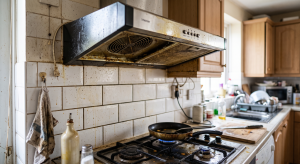
Over time, filters become loaded. Grease also settles on the underside of the hood and other accessible internal surfaces. Heat can soften those deposits, allowing them to move and eventually form droplets.
Common warning signs include:
- Sticky filter mesh
- Yellow or brown droplets under the hood
- Grease on the splashback directly below the extractor
- A stale cooking smell when the fan runs
- Dust sticking to the top or edges of the canopy
- Reduced extraction compared with normal
Reduced airflow can have several causes, so cleaning should not be presented as a repair for every weak fan. However, a heavily contaminated filter is an obvious place to start.
The niche difference: ducted and recirculating hoods
Not every cooker hood handles air in the same way. A ducted unit sends extracted air outside, while a recirculating hood passes air through filters and returns it to the room.
Both commonly use grease filtration, but a recirculating model may also have a carbon or charcoal filter intended to manage odours. The correct maintenance depends on the appliance and filter type.
Metal grease filters may be washable if the manufacturer permits it. Paper, fabric, charcoal and other replaceable filters usually have different instructions and service lives. Putting the wrong filter into water can damage it rather than clean it.
Why wiping the canopy does not solve dripping
Cleaning the visible stainless steel removes the final drip, not necessarily the source. If the filter above it remains saturated, new grease can soon appear.
A more complete approach considers:
- The outside and underside of the canopy
- The type and condition of the filters
- Accessible grease inside the hood
- The surrounding splashback and hob
- Whether the fan still behaves abnormally after cleaning
Electrical parts should not be flooded or sprayed indiscriminately. Isolate and maintain the appliance according to the manufacturer’s instructions, and arrange a qualified repair if there is an electrical or mechanical concern.
When a paper filter needs replacement
Some hoods use disposable paper filters rather than reusable metal mesh. Once heavily loaded, these are replaced rather than scrubbed.

OvenKing technicians carry common replacement parts, including filters, and the current oven-cleaning price list includes extractor cleaning as well as a listed charge for replacing an extractor paper filter. Availability and suitability should be confirmed for the particular hood.
This can be convenient when the extractor is booked alongside an oven, hob or microwave, as several grease-affected appliances can be addressed during one kitchen visit.
Simple habits that slow down grease build-up
- Switch the extractor on before heavy frying begins
- Use a suitable fan setting for the cooking method
- Keep pan lids on where appropriate
- Wipe the hood exterior once it is cool
- Inspect filters regularly rather than waiting for visible drips
- Follow the manufacturer’s cleaning or replacement schedule
- Avoid spraying cleaner into switches, motors or lights
Frequency depends on how often and how heavily the kitchen is used. A household that fries daily will load its filters faster than one that mainly boils or steams food.
Let OvenKing clean the whole cooking area
If your oven is clean but the hood continues to release stale odours or greasy droplets, the kitchen will never feel properly refreshed. Adding the extractor to an oven-cleaning appointment tackles the contamination above the hob as well as inside the cooker.
OvenKing provides professional oven, hob, microwave and extractor-hood cleaning across Dorset, Hampshire and nearby locations, using fume-free cleaning products and trained technicians.
Ask OvenKing for an accurate quote or call 01202 705040. Tell the team whether your hood has metal, paper or charcoal filters if known, and include a photograph where possible.

