
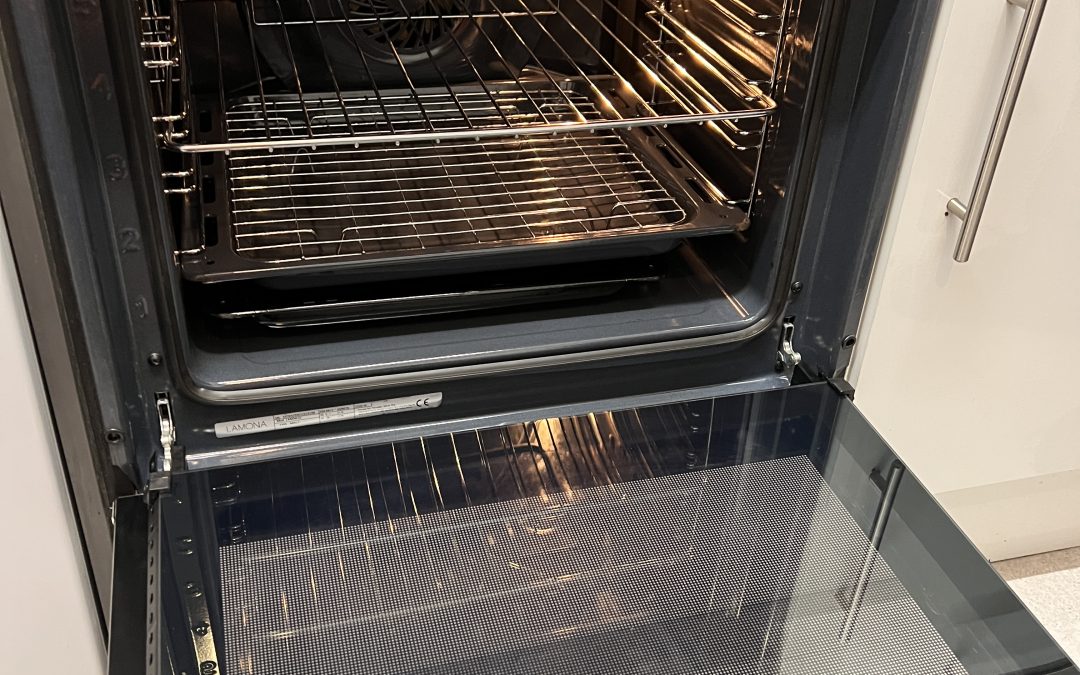
Catalytic oven cleaning can be confusing when the walls look rough but the floor looks smooth. You might assume every surface needs the same spray and scrub. However, those panels may have a special coating that needs a different approach.
The key is to identify the surfaces before treating them. A cleaner should work around the appliance’s design, rather than judge the method by how dark a mark looks.
Rough panels are not simply dirty enamel
Some ovens contain catalytic or other self-cleaning coated liners. These may sit at the back, along the sides or in several places. Their texture is part of the design, so they should not look like polished glass after cleaning.
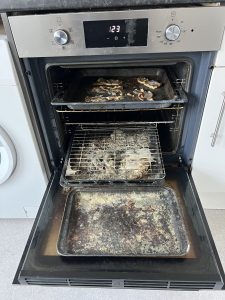
Meanwhile, the floor, door and other parts may use different materials. Therefore, a feature on one panel does not mean the whole appliance cleans itself.
Check your model’s manual to find the coated areas. If you cannot identify them, take a photograph and ask before applying a product.
Catalytic oven cleaning starts with the manual
Manufacturer instructions can set clear limits on cleaners and tools. For example, this Bosch oven manual warns against oven cleaner and scouring pads on its self-cleaning surfaces.
That advice belongs to the listed model. Your own manual remains the right starting point for your appliance. Do not copy a treatment simply because another oven looks similar.
Also tell the technician about products you have already used. This helps them assess the panels and set realistic expectations before starting.
Look at the surfaces around the liners
A coated panel does not remove the need to check the rest of the oven. Grease may remain on suitable door surfaces, shelves and accessible areas around the cavity.
In addition, a spill can reach the smooth floor even when the side panels look fairly clean. These separate areas need attention according to their own materials and instructions.
This is why a complete inspection is more useful than concentrating on one stubborn patch. It helps define the work without treating every part alike.
Know what cleaning can change
Cleaning cannot repair a worn coating or restore damaged enamel. Likewise, a textured liner may keep a different appearance from the surrounding surfaces.
Ask the cleaner to explain any marks that may remain. A clear discussion helps you judge the result fairly and decide whether a part needs separate advice.
Before the visit, share the make and model. Leave the oven off and cool, and follow the booking team’s preparation instructions.
Ask OvenKing about your oven’s liner type
OvenKing offers oven cleaning across Dorset, Hampshire and surrounding areas. Check our oven cleaning prices and describe your appliance when requesting a quote.
Need catalytic oven cleaning without guessing which surfaces to scrub? Request an OvenKing quote or call 01202 705040. Send a photo of the cavity so we can discuss the right scope for your clean.

